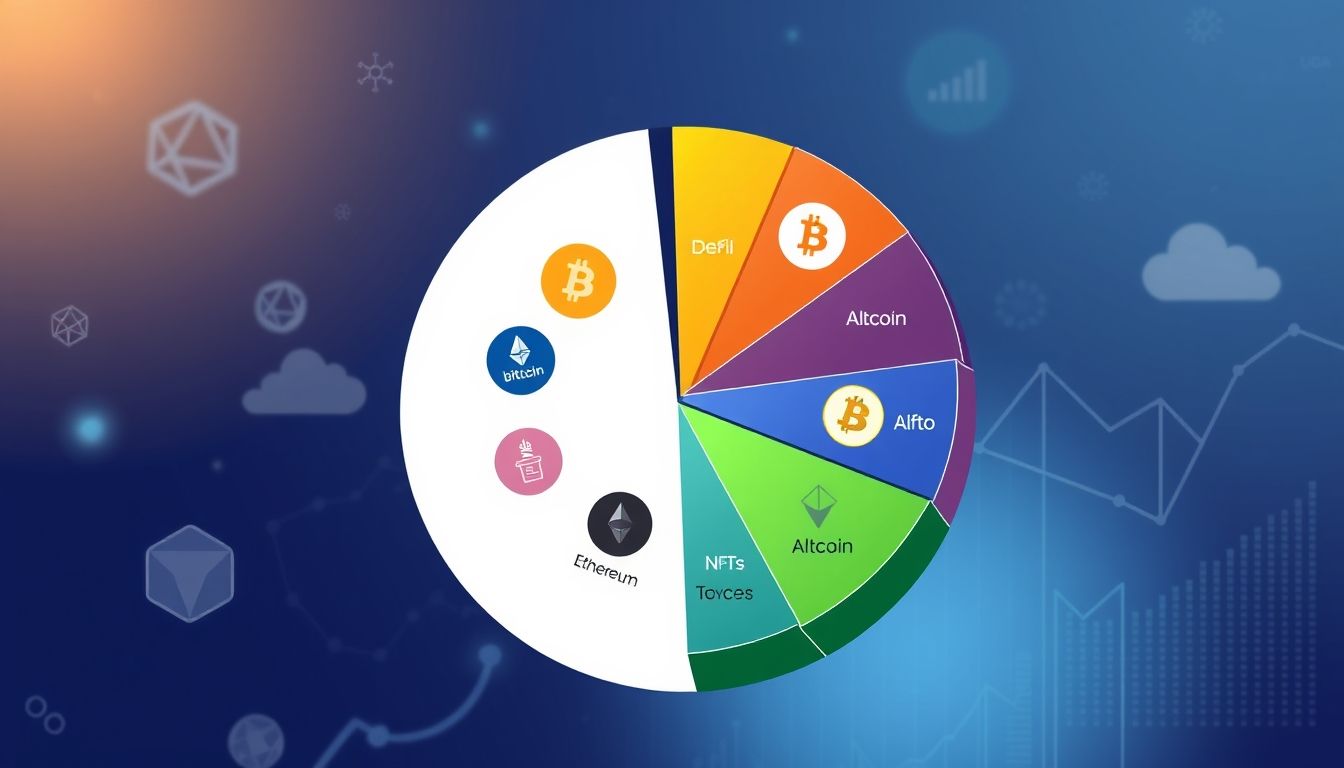
Introduction: Why is Diversification Essential in the Cryptocurrency World?
The cryptocurrency market experiences sharp fluctuations, making it a high-risk investment environment. Diversification is a fundamental strategy to mitigate these risks and protect capital. Instead of putting all your eggs in one basket, diversification allows you to distribute investments across different assets, reducing the impact of any potential loss in one asset on the entire portfolio.
Chapter 1: Understanding the Basics of Diversification
What is Diversification?
Diversification is the distribution of investments across a variety of assets with the aim of reducing risk. In the context of cryptocurrencies, this means investing in a variety of different cryptocurrencies, as well as other related assets.
Why is Diversification Important?
- Risk Reduction: Distributing investments reduces the impact of price fluctuations on your portfolio.
- Increased Growth Opportunities: Diversification gives you the opportunity to benefit from the growth of different cryptocurrencies.
- Protection from Volatility: Helps reduce the impact of negative events on your portfolio.
Chapter 2: Types of Cryptocurrencies Suitable for Diversification
Large-Cap Cryptocurrencies
This category includes cryptocurrencies with large market capitalization such as Bitcoin (BTC) and Ethereum (ETH). These currencies are considered more stable and less prone to extreme fluctuations.
Mid-Cap Cryptocurrencies
This category includes cryptocurrencies with medium market capitalization that offer potentially greater growth than large-cap cryptocurrencies, but also carry higher risks.
Small-Cap Cryptocurrencies
These currencies are characterized by their small market capitalization and the potential for significant gains, but they also carry very high risks.
DeFi (Decentralized Finance) Coins
These coins focus on decentralized finance applications and offer unique opportunities to invest in innovative projects.
NFT (Non-Fungible Tokens) Coins
These coins represent ownership of unique digital assets such as artwork and collectibles.
Chapter 3: Different Diversification Strategies
Diversification by Market Capitalization
Distributing investments between large, medium, and small-cap cryptocurrencies. Example: Allocating 50% to large-cap, 30% to mid-cap, and 20% to small-cap cryptocurrencies.
Diversification by Sector
Investing in cryptocurrencies belonging to different sectors such as Decentralized Finance (DeFi), Gaming, and Supply Chains. Example: Allocating a portion of the portfolio to DeFi coins and another portion to Gaming coins.
Geographic Diversification
Investing in cryptocurrency projects based in different geographic regions to reduce risks associated with local economic and political conditions.
Chapter 4: Factors to Consider When Diversifying
Risk Tolerance
Diversification should be consistent with your risk tolerance. If you are not comfortable with high risks, it is best to focus on large-cap and more stable cryptocurrencies.
Investment Goals
Diversification should align with your investment goals. If you are seeking rapid growth, you may be willing to take on higher risks and invest in small-cap cryptocurrencies.
Time Horizon
You should consider the time horizon of your investment. If you are investing for the long term, you can tolerate some short-term volatility.
Chapter 5: Available Diversification Tools
Exchange-Traded Funds (ETFs)
Exchange-traded funds provide an easy way to invest in a variety of cryptocurrencies by purchasing a single share.
Trading Platforms
Trading platforms allow you to buy and sell a variety of cryptocurrencies directly.
Cryptocurrency Wallets
Cryptocurrency wallets allow you to store and manage your cryptocurrency investments.
Chapter 6: Practical Examples of Diversification
Example 1: Conservative Portfolio
Consists of 70% large-cap cryptocurrencies (Bitcoin, Ethereum), 20% mid-cap cryptocurrencies, and 10% small-cap cryptocurrencies.
Example 2: Balanced Portfolio
Consists of 50% large-cap cryptocurrencies, 30% mid-cap cryptocurrencies, and 20% small-cap and DeFi cryptocurrencies.
Example 3: Aggressive Portfolio
Consists of 30% large-cap cryptocurrencies, 30% mid-cap cryptocurrencies, and 40% small-cap and NFT cryptocurrencies.
Chapter 7: Practical Tips for Implementing a Diversification Strategy
- Research and Analysis: Conduct thorough research before investing in any cryptocurrency.
- Set Goals: Define your investment goals and the level of risk you can tolerate.
- Regular Review: Review your portfolio regularly and make necessary adjustments.
- Gradual Investment: Do not invest all your money at once, but invest gradually over a period of time.
- Financial Consultation: Consult a financial advisor for personalized advice.
Chapter 8: Common Mistakes to Avoid
- Investing in Only One Cryptocurrency: Avoid putting all your money in one cryptocurrency.
- Investing Based on Recommendations Only: Do not invest based on the recommendations of others without doing your own research.
- Completely Ignoring Risks: Be aware of the risks associated with investing in cryptocurrencies.
- Investing Too Much: Do not invest more than you can afford to lose.
Chapter 9: The Future of Diversification in the Cryptocurrency Market
As the cryptocurrency market continues to evolve, diversification strategies will become more sophisticated and complex. New tools and products will emerge to facilitate the diversification process and make it more effective.
Chapter 10: Conclusion
Diversification is the key to success in the world of cryptocurrencies. By understanding the basics of diversification and applying appropriate strategies, you can build a strong and sustainable portfolio that achieves your investment goals.
Disclaimer: Investing in cryptocurrencies involves high risks. You should conduct your own research and consult a financial advisor before making any investment decisions.