Smart Trading: How to Use Fundamental Analysis and Economic News for Sustainable Profits
In the volatile world of trading, fundamental analysis and economic news are powerful tools for investors. Learn how to use them to make informed decisions and achieve sustainable profits.
Chapter 1: Introduction to Fundamental Analysis
Fundamental analysis is a method of evaluating securities by examining related economic and financial factors. It aims to determine whether an asset's value is overvalued or undervalued.
What is Fundamental Analysis?
Fundamental analysis focuses on examining a company's financial data, such as revenues, profits, and debts, as well as macroeconomic factors, such as growth rates, inflation, and interest rates.
Importance of Fundamental Analysis for Traders
- Helps understand the true value of an asset.
- Reduces reliance on random speculation.
- Provides a solid basis for making long-term investment decisions.
Chapter 2: Understanding Company Financial Statements
Company financial statements are the cornerstone of fundamental analysis. These statements include the balance sheet, income statement, and cash flow statement.
Balance Sheet
The balance sheet shows a company's assets, liabilities, and equity at a specific point in time. It helps assess the company's financial position and its ability to meet its obligations.
Income Statement
The income statement shows a company's revenues, expenses, and profits over a period of time. It helps assess the company's performance and profitability.
Cash Flow Statement
The cash flow statement shows the movement of cash in and out of the company over a period of time. It helps assess the company's ability to generate cash and manage its liquidity.
Chapter 3: Key Financial Ratios
Financial ratios are used to evaluate a company's performance and compare it to other companies in the same industry. These ratios include the price-to-earnings ratio (P/E), debt-to-equity ratio (D/E), and return on equity (ROE).
Price-to-Earnings Ratio (P/E)
The price-to-earnings ratio compares the price per share to the earnings per share. It indicates whether the stock is undervalued or overvalued.
Debt-to-Equity Ratio (D/E)
The debt-to-equity ratio compares a company's total debt to its equity. It indicates how much the company relies on debt to finance its operations.
Return on Equity (ROE)
Return on equity measures how efficiently a company uses equity to generate profits.
Chapter 4: Industry and Competition Analysis
Understanding the industry in which the company operates is crucial to assessing its future performance. This includes analyzing market size, growth rate, and competition.
Market Size and Growth Rate Analysis
Analyzing market size and growth rate helps determine the company's future growth potential.
Competition Analysis
Analyzing competition helps identify the company's competitive advantage and how it can outperform its competitors.
Chapter 5: The Role of Economic News in Trading
Economic news plays a crucial role in influencing financial markets. This news includes gross domestic product (GDP) data, inflation rates, interest rate decisions, and employment data.
Gross Domestic Product (GDP) Data
GDP is a key indicator of the health of the economy. Strong GDP growth indicates a strong economy, while contraction indicates a weak economy.
Inflation Rates
Inflation rates measure the rate at which prices for goods and services are rising. High inflation rates can negatively impact companies and consumers.
Interest Rate Decisions
Interest rate decisions affect the cost of borrowing. High interest rates can slow down economic growth, while low interest rates can stimulate economic growth.
Employment Data
Employment data provides information about the number of people employed and unemployed. Increasing employment can indicate a strong economy, while decreasing employment can indicate a weak economy.
Chapter 6: Reliable Sources of Economic News
It is essential to rely on reliable sources of economic news to make informed trading decisions. These sources include major news agencies, financial websites, and central bank reports.
Major News Agencies
Major news agencies, such as Reuters and Bloomberg, provide comprehensive coverage of economic and financial news.
Financial Websites
Financial websites, such as Yahoo Finance and Investing.com, provide information about financial markets and companies.
Central Bank Reports
Central banks, such as the European Central Bank and the US Federal Reserve, publish reports on the economy and monetary policy.
Chapter 7: How to Use Economic News in Trading
Economic news can be used to identify potential trends in financial markets and make informed trading decisions. For example, if GDP data is strong, this may be a signal that stocks will rise.
Identifying Potential Trends
Economic news can be used to identify potential trends in financial markets.
Making Informed Trading Decisions
Economic news can be used to make informed trading decisions based on available data.
Chapter 8: Practical Examples from the Arab Market
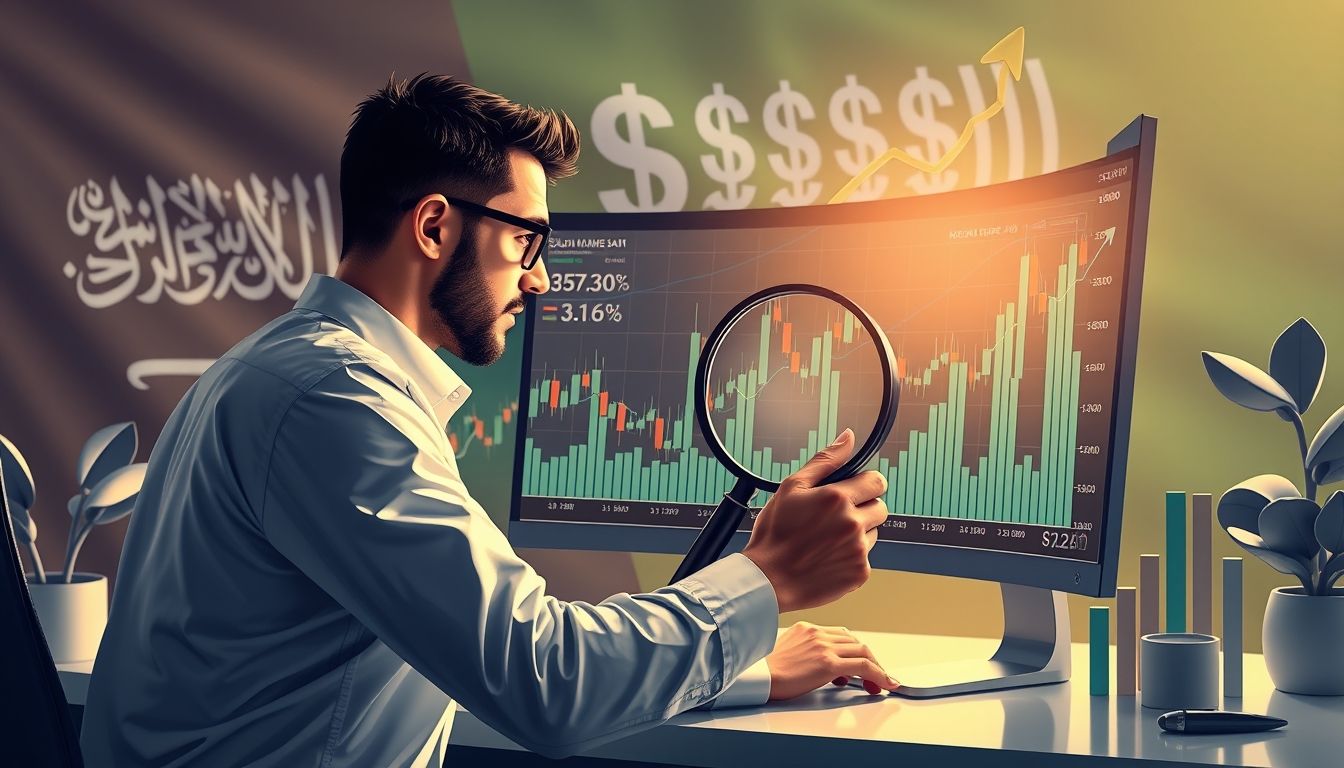
Saudi Aramco is a good example of how economic news can affect stock prices. For example, changes in global oil prices can affect the company's profits and stock price.
Saudi Aramco
Saudi Aramco is the world's largest oil company. Changes in global oil prices can affect the company's profits and stock price.
Real Estate Sector in Dubai
The real estate sector in Dubai is affected by economic news related to economic growth, tourism, and foreign investment.
Chapter 9: Tips for New Traders
Start by learning the basics of fundamental analysis and economic news. Practice analyzing financial data and economic news before risking real money. Be patient and persistent, and don't expect to make quick profits.
Learn the Basics
Start by learning the basics of fundamental analysis and economic news.
Practice and Training
Practice analyzing financial data and economic news before risking real money.
Patience and Perseverance
Be patient and persistent, and don't expect to make quick profits.
Chapter 10: Conclusion
Fundamental analysis and economic news are powerful tools for traders seeking to achieve sustainable profits. By understanding company financial statements and analyzing economic news, traders can make informed decisions and reduce risk.
Disclaimer: This article is for educational purposes only and does not constitute investment advice. Consult a financial advisor before making any investment decisions.