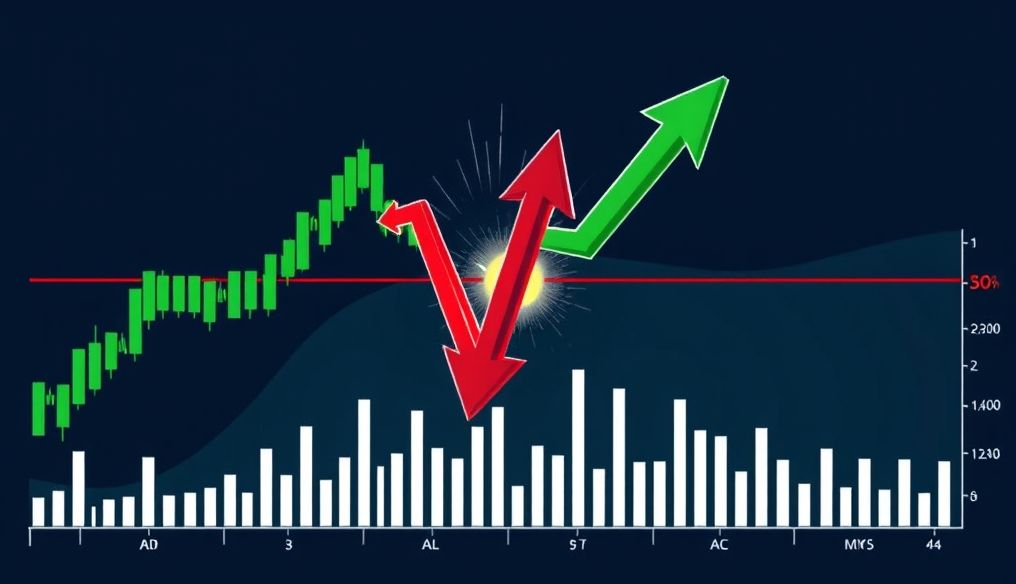
Introduction to the Breakout and Breakdown Strategy
The breakout and breakdown strategy is a technical trading approach based on identifying key support and resistance levels on price charts. When the price breaks through these important levels, it can signal the start of a new trend, providing opportunities for traders to profit.
Chapter 1: Understanding Support and Resistance
What are Support and Resistance?
Support: is a price level where the price tends to bounce. It represents a strong demand area where buyers are expected to enter the market.
Resistance: is a price level where the price tends to fall. It represents a strong supply area where sellers are expected to enter the market.
Support and resistance levels can be identified by:
- Looking at previous highs and lows on the chart.
- Using moving averages.
- Using trend lines.
Chapter 2: Identifying Breakouts and Breakdowns
What is a Breakout?
A breakout occurs when the price moves above a resistance level.
What is a Breakdown?
A breakdown occurs when the price moves below a support level.
To effectively identify breakouts and breakdowns, consider:
- Volume: The breakout or breakdown should be accompanied by significant trading volume to confirm its validity.
- Duration: The price should remain above or below the broken level for a sufficient period to confirm the breakout or breakdown.
- Retest: The price often returns to test the broken support or resistance level before continuing the new trend.
Chapter 3: Trading Strategies Using Breakouts and Breakdowns
Buying on a Breakout Strategy
When the price breaks through a resistance level, traders can enter a buy trade, expecting the price to continue rising.
Example: If the stock of "Saudi Aramco" is trading below a resistance level at 35 riyals, and then breaks this level with significant trading volume, traders can enter a buy trade, placing a stop-loss order below the broken resistance level.
Selling on a Breakdown Strategy
When the price breaks a support level, traders can enter a sell trade, expecting the price to continue falling.
Example: If the "Euro/Dollar" currency pair is trading above a support level at 1.08, and then breaks this level with significant trading volume, traders can enter a sell trade, placing a stop-loss order above the broken support level.
Chapter 4: Confirming Breakouts and Breakdowns
It is important to confirm breakouts and breakdowns before entering trades to avoid false signals.
Confirmation Tools
- Technical Indicators: such as the Relative Strength Index (RSI) and the MACD indicator.
- Candlestick Patterns: such as bullish and bearish engulfing patterns.
- Volume: The breakout or breakdown should be accompanied by high trading volume.
Chapter 5: Risk Management
Risk management is an essential part of trading using the breakout and breakdown strategy.
Stop-Loss Orders
Stop-loss orders should be placed to protect capital in the event of an adverse price movement.
Example: When entering a buy trade after a breakout of a resistance level, a stop-loss order can be placed below the broken resistance level.
Position Size
The position size should be determined based on risk tolerance and available capital.
General Rule: Do not risk more than 1-2% of capital in any single trade.
Chapter 6: Practical Examples from the Arab Market
Let's take a look at some practical examples from the Arab market where the breakout and breakdown strategy can be applied.
Saudi Basic Industries Corporation (SABIC) Stock
In 2023, SABIC's stock broke a key resistance level at 100 riyals, leading to a significant price increase. This breakout was a good opportunity for traders to enter buy trades.
Saudi Riyal/US Dollar Currency Pair
In the first quarter of 2024, the Saudi Riyal/US Dollar currency pair broke a key support level at 3.75, leading to a depreciation of the Saudi Riyal. This breakdown was a good opportunity for traders to enter sell trades.
Chapter 7: Technical Indicators Used in the Breakout and Breakdown Strategy
Many technical indicators can be used to identify and confirm breakouts and breakdowns.
Moving Averages
Moving averages are used to identify the overall trend of the price. Moving averages can be used to identify dynamic support and resistance levels.
Relative Strength Index (RSI)
The Relative Strength Index measures the strength of the trend. The RSI can be used to identify overbought and oversold areas.
MACD Indicator
The MACD indicator is used to identify changes in price momentum. The MACD can be used to identify potential breakouts and breakdowns.
Chapter 8: Common Mistakes in Trading Using the Breakout and Breakdown Strategy
There are some common mistakes that traders make when using the breakout and breakdown strategy.
- Entering trades based on false breakouts or breakdowns.
- Not using stop-loss orders.
- Risking too much capital in a single trade.
- Not confirming breakouts and breakdowns.
Chapter 9: Tips for Improving Your Trading Strategy
- Practice the breakout and breakdown strategy on a demo account before trading with real money.
- Use a variety of technical indicators to confirm breakouts and breakdowns.
- Be patient and wait for clear signals before entering trades.
- Review your past trades to identify mistakes and learn from them.
- Stay informed about market news and economic events that may affect prices.
Chapter 10: Conclusion
The breakout and breakdown strategy is an effective trading technique that can help traders profit in financial markets. However, it is important to understand the principles of support and resistance, identify breakouts and breakdowns correctly, and manage risk effectively. Through training and practice, traders can master this strategy and achieve success in trading.