Introduction to Algorithmic Trading
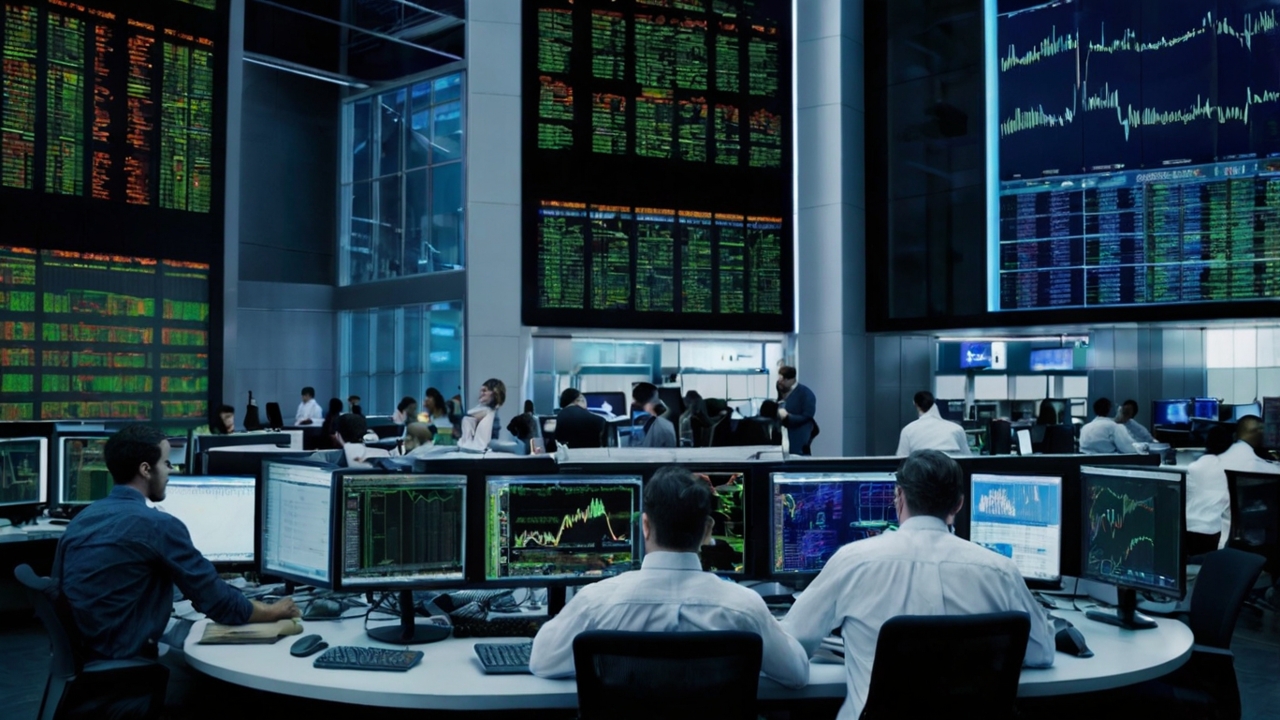
Financial markets have undergone a radical transformation in recent decades, driven by tremendous technological advancements. One of the most notable of these transformations is the emergence of Algorithmic Trading, which relies on the use of computer algorithms to execute trades faster and more efficiently than human traders.
Algorithmic trading, also known as algo-trading or quant trading, represents a sophisticated investment strategy that uses complex mathematical and statistical models to make trading decisions. These models are programmed to identify trading opportunities based on a variety of factors, such as price movements, trading volume, economic indicators, and news.
Algorithmic trading aims to capitalize on short-term trading opportunities that may not be visible or exploitable by human traders. It also aims to reduce the risks associated with manual trading, such as human errors and emotional biases.
Chapter 1: Basics of Algorithmic Trading
1.1 Definition of Algorithmic Trading
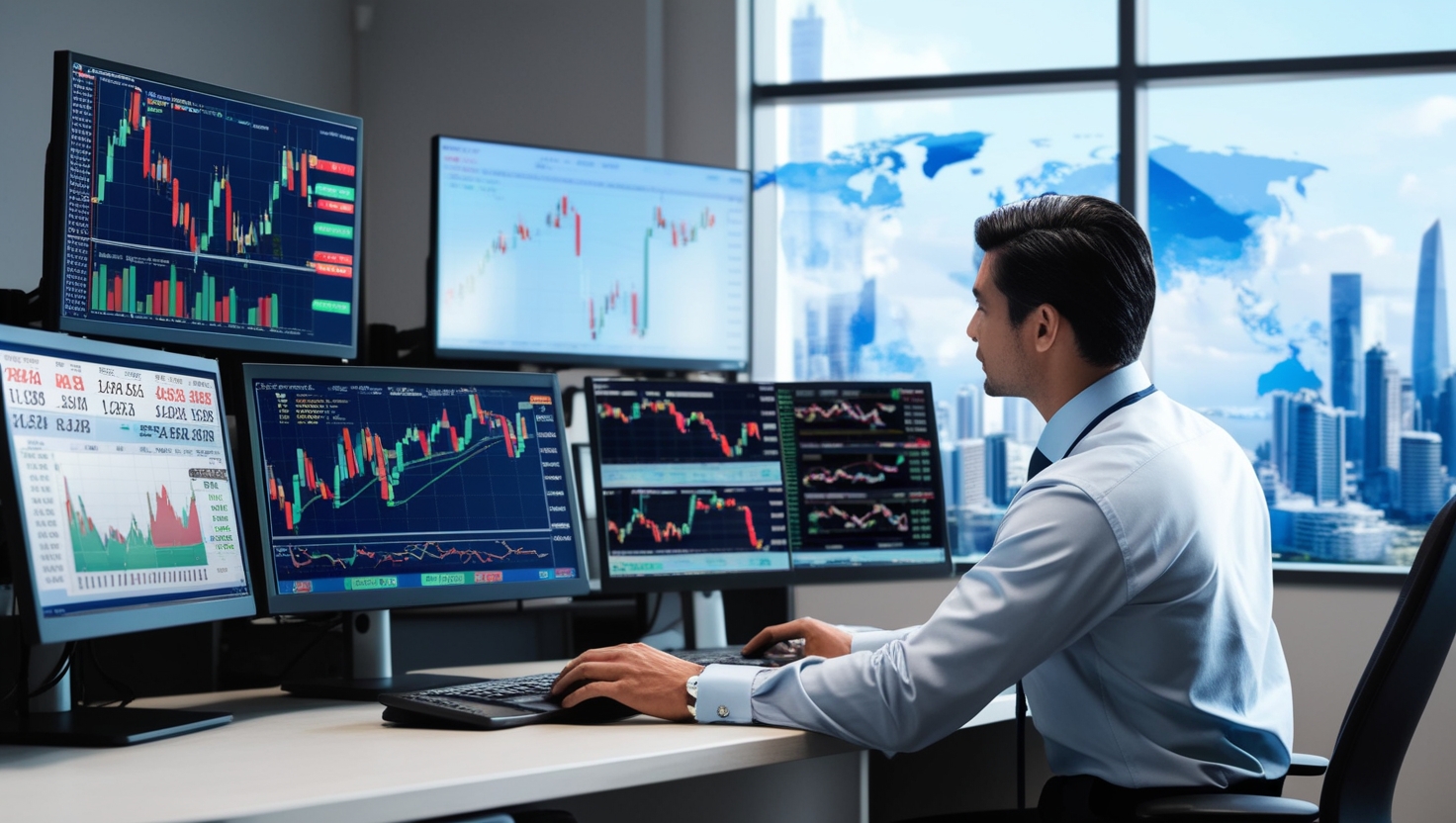
Algorithmic trading is the use of computer programs to execute trading orders based on a predefined set of instructions. These instructions, or algorithms, determine when and how financial assets should be bought or sold.
1.2 Key Components of an Algorithmic Trading System
- Data: Includes historical data and current data on prices, trading volume, technical indicators, and economic news.
- Algorithm: Is the set of instructions that determines when and how trades should be executed.
- Trading Platform: Is the software that connects to financial markets and executes trading orders.
- Infrastructure: Includes the servers and communication networks needed to run the system.
Chapter 2: Types of Algorithms Used in Algorithmic Trading
2.1 Trend-Following Strategies
These strategies rely on identifying price trends (upward or downward) and executing trades in the direction of that trend. Technical indicators such as moving averages and the Relative Strength Index (RSI) are often used to identify trends.
2.2 Arbitrage Strategies
These strategies exploit small differences in the prices of the same asset in different markets to achieve guaranteed profits. Arbitrage requires very fast execution, making it ideal for algorithmic trading.
2.3 High-Frequency Trading (HFT) Strategies
These strategies involve executing a very large number of trades within seconds or even fractions of a second. HFT relies on speed of access to data and order execution, and is often used to exploit small price differences between buy and sell orders.
2.4 Market Making Strategies
These strategies aim to provide liquidity in the market by placing buy and sell orders at different prices. Market makers profit from the difference between the buy and sell prices (the spread).
Chapter 3: Advantages and Disadvantages of Algorithmic Trading
3.1 Advantages
- Speed and Efficiency: Algorithms can execute trades much faster than human traders.
- Reduced Human Error: Algorithmic trading eliminates emotional biases and human errors that may affect trading decisions.
- 24/7 Trading: Algorithms can trade around the clock, even outside of regular trading hours.
- Diversification of Strategies: A variety of algorithms can be used to diversify investment strategies and reduce risk.
- Testing Strategies: Algorithms can be tested on historical data to evaluate their performance before being used in real trading.
3.2 Disadvantages
- Cost: Developing and maintaining algorithmic trading systems can be expensive.
- Complexity: Designing and implementing effective trading algorithms requires specialized technical and financial expertise.
- Technical Risks: Systems can fail due to software errors or infrastructure problems.
- Regulatory Risks: Algorithmic trading systems are subject to increasing regulatory scrutiny.
- Over-Reliance on Historical Data: Algorithms may not perform well in unexpected market conditions.
Chapter 4: Impact of Algorithmic Trading on Financial Markets
4.1 Increased Liquidity
Algorithmic trading contributes to increased liquidity in financial markets by providing continuous buy and sell orders.
4.2 Reduced Spreads
Algorithmic trading helps reduce spreads between buy and sell orders, reducing trading costs for investors.
4.3 Increased Volatility
In some cases, algorithmic trading can contribute to increased volatility in financial markets, especially during periods of economic news or significant political events.
4.4 Changing Market Structure
Algorithmic trading has changed the structure of the market, with algorithmic traders representing a significant portion of total trading volume.
Chapter 5: Practical Examples of Algorithmic Trading Usage
5.1 Hedge Funds
Hedge funds widely use algorithmic trading to implement complex investment strategies and achieve high returns.
5.2 Proprietary Trading Firms
These firms rely heavily on algorithmic trading to profit from exploiting short-term trading opportunities.
5.3 Investment Banks
Investment banks use algorithmic trading to execute client orders and manage risk.
Chapter 6: Regulatory and Legal Challenges
6.1 Algorithm Oversight
Regulatory bodies face challenges in overseeing the algorithms used in algorithmic trading to ensure they are not used to manipulate markets.
6.2 Liability for Errors
Determining liability for errors that may occur due to algorithms is a complex legal challenge.
6.3 Investor Protection
Regulatory bodies aim to protect investors from the risks associated with algorithmic trading.
Chapter 7: The Future of Algorithmic Trading
7.1 Algorithm Evolution
The algorithms used in algorithmic trading are expected to continue to evolve, with a focus on using advanced techniques for data analysis and price prediction.
7.2 Increased Adoption
Algorithmic trading is expected to become more widespread in financial markets, becoming more accessible to individual investors and small institutions.
7.3 Integration with Other Technologies
Algorithmic trading is expected to be integrated with other technologies such as cloud computing and big data analysis to improve performance and efficiency.
Chapter 8: How to Get Started in Algorithmic Trading
8.1 Choose the Right Platform
Look for a trading platform that supports algorithmic trading and provides the tools and resources needed to develop and implement algorithms.
8.2 Learn Programming
Learn a programming language such as Python or R, which are widely used in algorithm development.
8.3 Develop a Trading Strategy
Develop a trading strategy based on solid foundations and test it on historical data before using it in real trading.
8.4 Risk Management
Develop a risk management plan to protect your capital in case of unexpected losses.
Chapter 9: Tips for Algorithmic Traders
- Stay Informed: Keep up with developments in financial markets and technology to stay informed of the latest trends and opportunities.
- Test Your Strategies Regularly: Test your strategies on historical data and continuously to ensure their effectiveness.
- Monitor Algorithm Performance: Monitor the performance of your algorithms continuously and adjust them as needed.
- Be Aware of the Risks: Do not invest more than you can afford to lose.
Chapter 10: Conclusion
Algorithmic trading represents a true revolution in financial markets, offering opportunities for investors to achieve rapid profits and reduce risk. However, it requires a deep understanding of financial markets and technology, as well as careful risk management. Through continuous learning and adapting to market changes, algorithmic traders can achieve success in this exciting field.
Disclaimer: This article is for educational and informational purposes only and does not constitute investment advice. Investors should consult with a qualified financial advisor before making any investment decisions.